Why does my dog sigh while resting beside me? It is a question many pet parents ask after hearing one surprisingly deep breath from an otherwise comfortable dog.
A sigh is usually a natural deep exhale and often accompanies relaxation. However, dogs may also sigh when they are waiting, seeking attention, feeling disappointed, or experiencing discomfort.
The sound alone rarely reveals the answer. To understand what it means, observe your dog’s eyes, posture, breathing, and what happened immediately before the sigh.
Sighing is only one of the subtle ways dogs communicate. Even familiar habits, such as following you from room to room, can have several possible explanations.
Why Does My Dog Sigh?
Dogs sigh for several possible reasons. A relaxed dog may sigh while settling down to rest, while an alert dog may sigh after waiting unsuccessfully for something.
The meaning depends on three pieces of context:
- What your dog was doing before the sigh
- Whether their body looks loose or tense
- Whether their breathing appears normal at other times
Here are six common explanations.
1. Your Dog Feels Relaxed
Contentment is one of the most common explanations for a dog sighing while resting.
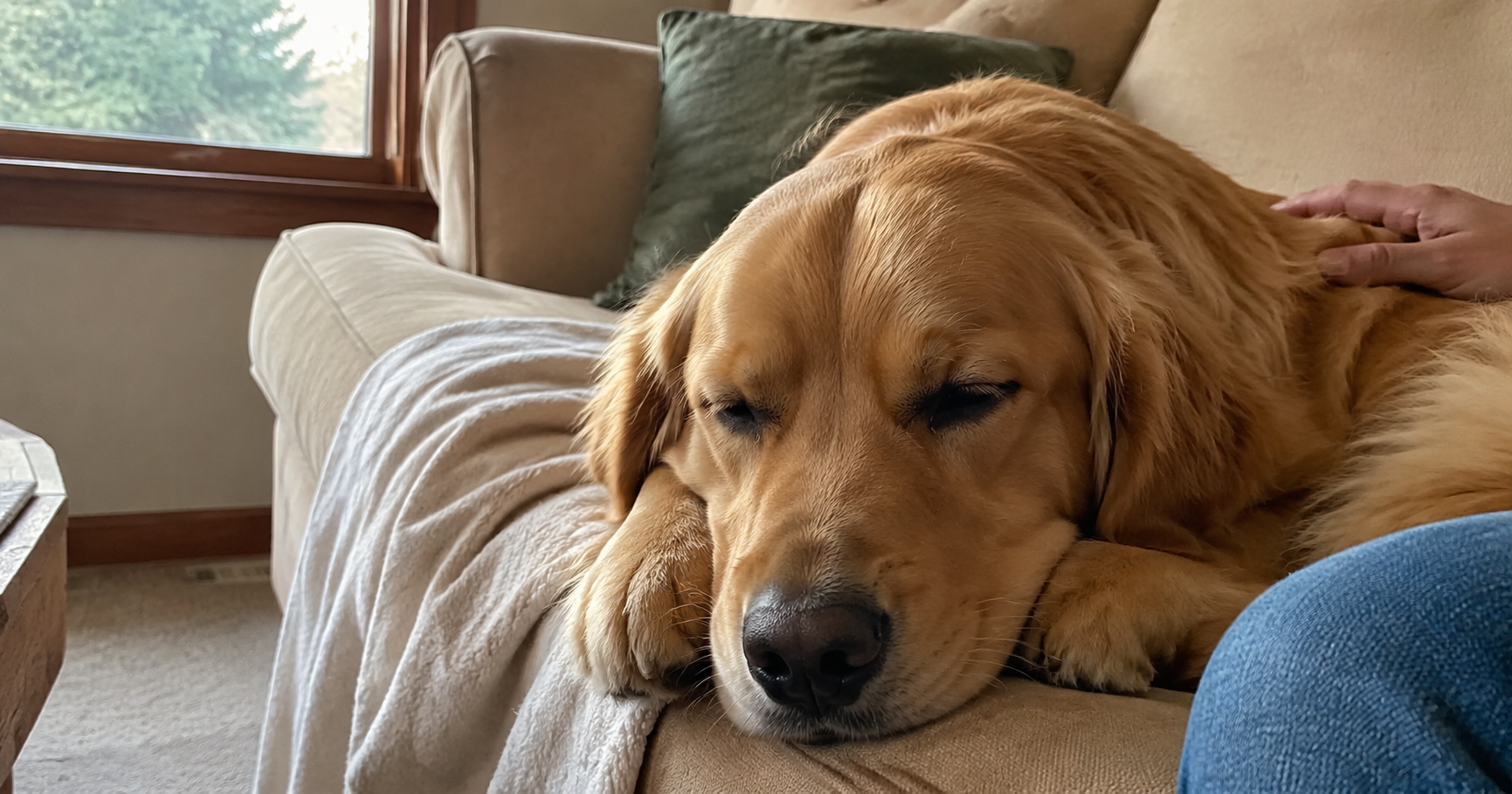
You may hear it after your dog has eaten, finished playing, returned from a walk, or curled up beside someone they trust. Their muscles look loose, their head rests comfortably, and their eyes may be partially closed.
In this context, the sigh can be viewed as part of settling down rather than a request for help.
VCA Animal Hospitals notes that dogs commonly sigh during peaceful moments such as resting, cuddling, or settling after an activity.
If you are wondering, “Why does my dog sigh when lying beside me?” relaxed eyes and a loose resting posture usually point toward contentment.
2. Your Dog Is Ready to Sleep
A deep exhale often happens as a dog transitions from being awake to resting.
You might notice your dog circle their bed, lie down, adjust their paws, and release a sigh before closing their eyes. The breathing that follows should appear quiet, easy, and regular.
If your dog sighs once and then falls asleep comfortably, there is usually no reason to interrupt them.
3. Something Did Not Go as Expected
Sometimes a sigh appears after a dog waits for an outcome that never happens.
Perhaps your dog brought over a toy, watched you continue working, and finally lay down with a long exhale. Perhaps they waited near the door but realized that nobody was preparing for a walk.
Calling this “disappointment” may be a useful shorthand, but avoid assuming that dogs experience the moment exactly as humans do. What you can observe is a change from active anticipation to giving up and settling down.
Open, attentive eyes and continued focus on the desired person or object may distinguish this situation from a sleepy, contented sigh.
4. Your Dog Has Learned That Sighing Gets Attention
Dogs notice which behaviors receive a response.
If every dramatic sigh causes you to look over, speak, pet your dog, or begin playing, your dog may repeat the behavior in similar situations. The sigh itself is real, but attention can reinforce when and where it occurs.
Look for a pattern. Does your dog sigh while watching you and then become animated as soon as you respond? If so, the sound may have become part of their communication routine.
You do not need to ignore your dog. Instead, decide whether they need exercise, interaction, rest, or simply a moment of acknowledgment.
5. Your Dog May Be Feeling Uneasy
Why does my dog sigh in unfamiliar or stressful situations? In this context, the sigh should be interpreted alongside the rest of the dog’s body language.
Not every sigh signals relaxation. Context matters.
A sigh accompanied by a tense posture, repeated lip licking, pacing, pinned-back ears, panting without recent exercise, hiding, or an inability to settle may occur during stress.
Consider what is happening around your dog. Visitors, unfamiliar surroundings, construction noise, travel, or a disrupted routine can change their behavior.
One isolated sigh is not enough to diagnose anxiety. Repeated behavioral patterns are more informative than a single sound.
6. The Sound May Not Actually Be a Normal Sigh
Occasional sighing in an otherwise comfortable dog is generally different from abnormal or difficult breathing.
Contact your veterinarian if the sound is new, frequent, or accompanied by symptoms such as:
- Coughing, wheezing, or unusually noisy breathing
- Rapid breathing while fully at rest
- Obvious effort from the chest or abdomen
- Open-mouth breathing when the dog is not hot
- Pale or blue gums
- Weakness, collapse, reduced appetite, or unusual fatigue
Seek urgent veterinary care if your dog appears unable to breathe comfortably, collapses, or develops pale or blue gums.
A short video of the sound and a note describing when it happens can help your veterinarian understand what you are observing.
How to Read the Body Language Around a Sigh
The best way to answer “Why does my dog sigh?” is to examine the sound together with the dog’s posture, eyes, activity, and surroundings.
Do not interpret the sound in isolation. Look at the complete moment.
A likely relaxed sigh
- Loose body
- Soft or partially closed eyes
- Head resting comfortably
- Quiet, regular breathing afterward
- Familiar and peaceful surroundings
A sigh that deserves closer attention
- Stiff or restless body
- Wide or worried eyes
- Repeated pacing or panting
- Coughing or noisy breathing
- A sudden change from your dog’s normal behavior
Your dog’s usual pattern is the best point of comparison. A familiar bedtime sigh is different from a new breathing sound that begins suddenly and repeats throughout the day.
Should You Respond When Your Dog Sighs?
If your dog appears relaxed, no special response is necessary. Let them rest.
If they seem to be requesting interaction, check whether their normal needs have been met: water, bathroom access, exercise, companionship, and a comfortable place to settle.
If the sighing is frequent, new, or associated with other changes, record the circumstances and contact your veterinarian rather than attempting to diagnose the cause from the sound alone.
The Bottom Line
So, why does your dog sigh?
Most often, a sigh during rest is simply part of relaxing. In other moments, it may follow anticipation, help gain attention, or occur alongside stress. The clearest answer comes from observing the eyes, posture, activity, surroundings, and breathing that accompany it.
One peaceful sigh from a dog curled up beside you is usually just that: a quiet moment of comfort.
But when the sound changes, becomes frequent, or arrives with breathing difficulty or unusual behavior, it is time to speak with a veterinarian.
This article is for general educational purposes and is not a substitute for veterinary diagnosis or treatment.