Why does my pet follow me to the bathroom? If you have ever asked this question while looking at a nose pressed against the door—or one tiny paw reaching underneath it—you are not alone.
Table of Contents
Why Does My Pet Follow Me to the Bathroom?
1. Your Pet Simply Wants to Be Near You
The simplest explanation is often the right one: your pet likes your company.
Dogs are social animals, and many naturally remain close to the people with whom they feel safe. Cats may be more independent, but they can also form strong social relationships with their caregivers.
If your pet follows you calmly, settles outside the door and resumes normal activity when you return, the behavior probably reflects companionship rather than distress.
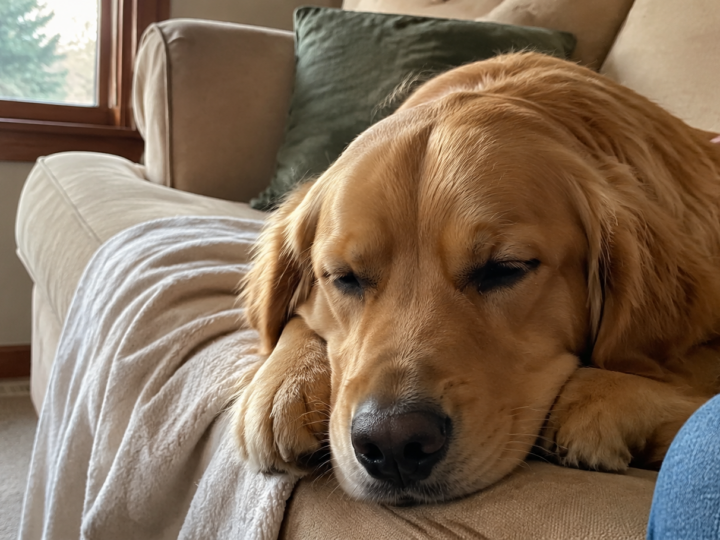
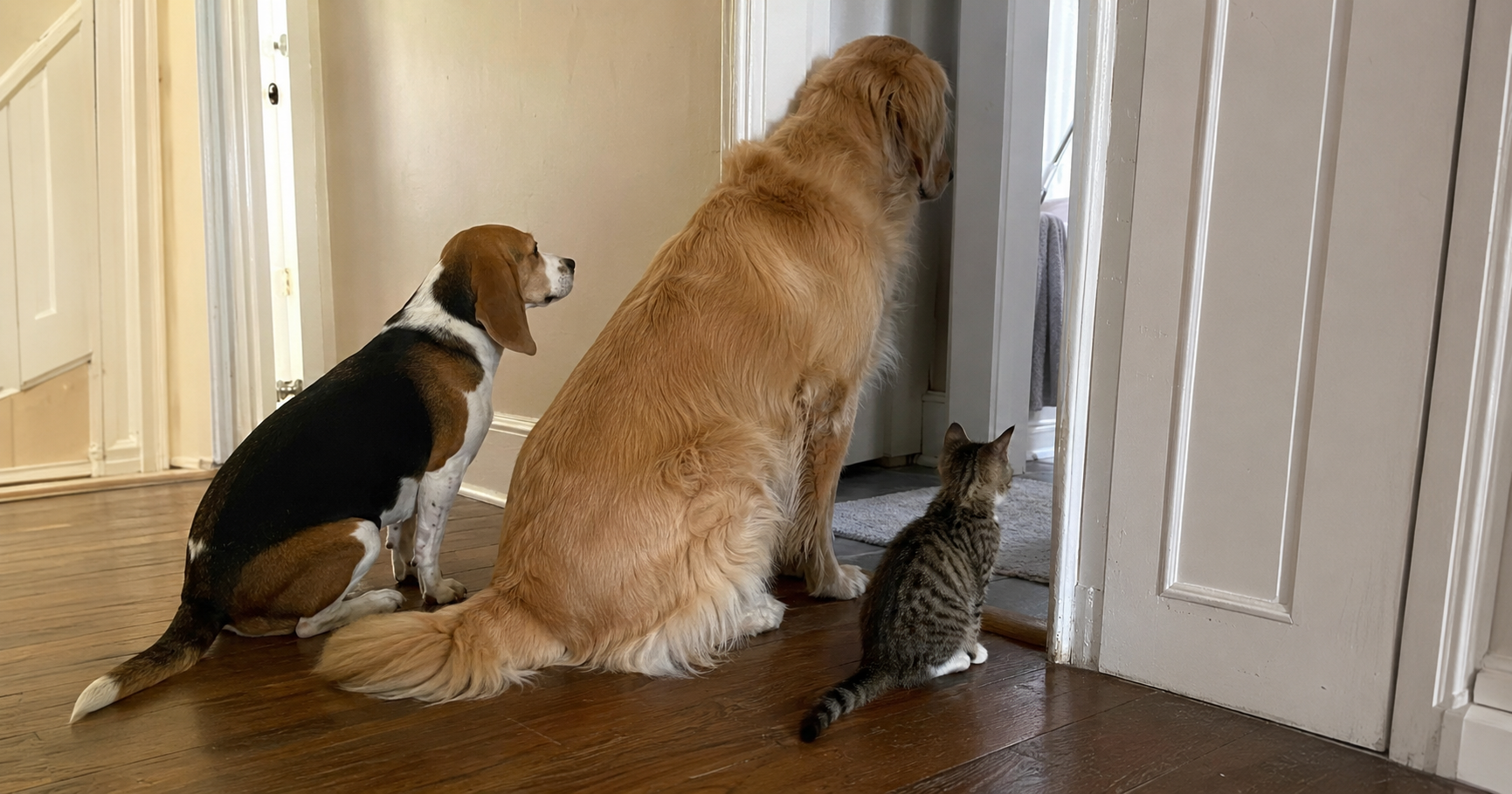
Moose, for example, may not need anything at all. Sitting nearby is simply part of his preferred routine.
Dogs can form visible preferences and attachments through familiarity, positive experiences, emotional connection and shared routines.
2. Following You Has Become Part of Their Routine
Pets are excellent observers of daily patterns.
They learn when you wake up, when meals happen and which activities usually lead to something enjoyable. If your trip down the hallway is sometimes followed by breakfast, a walk or playtime, your pet may follow because they are anticipating what happens next.
The behavior can also become self-reinforcing. If you speak to your pet, pet them or give them attention whenever they follow you, they learn that staying close produces a positive result.
In other words, your pet may follow you because the routine has worked before.
3. A Closed Door Is Immediately Interesting
A door that is normally open becomes far more interesting when it suddenly closes.
Dogs may investigate the new sound, movement or scent behind it. Cats are naturally attentive to changes in their environment, and a closed door prevents them from inspecting part of their territory.
Your pet may not be worried about you. They may simply want to know why access has suddenly been denied.
For a curious Beagle like Pickle, an unexplained closed door is practically an invitation to investigate.
4. The Bathroom Is Full of Interesting Sounds and Smells
Bathrooms contain many sensory details that humans barely notice.
Running water, moving shower curtains, echoing sounds, towels, bath mats and unfamiliar scents can all attract a pet’s attention. Cats may also be interested in sinks, dripping faucets and cool surfaces.
Dogs have a much more developed sense of smell than people, so a bathroom can provide an entire collection of information that we cannot detect.
The room may seem ordinary to you, but it is not necessarily ordinary to your pet.
5. Your Pet May Be Checking on You
Some pets monitor changes in their owner’s location and behavior.
If you suddenly disappear behind a door, your pet may briefly check where you went. This does not necessarily mean they believe you are in danger. They may simply feel more comfortable knowing where everyone in the household is.
A dog that waits quietly outside the door is behaving differently from a dog that panics, scratches continuously or attempts to force the door open.
Calm checking is usually normal. Intense distress deserves closer attention.
6. They Associate You With Safety
Young, newly adopted or naturally cautious pets may remain close to the person who makes them feel secure.
A kitten like Bean may follow the dogs as well as the owner because familiar companions provide reassurance in a large, unfamiliar home.
A pet may become temporarily more attached after moving house, experiencing a thunderstorm, meeting visitors or encountering another change in routine. Staying near a trusted person can help the animal feel safer while adjusting.
Give the pet predictable routines and comfortable resting places, but avoid forcing interaction when they choose to rest independently.
7. Sometimes Following Can Be Related to Anxiety
When pet parents ask, “Why does my pet follow me to the bathroom?” they are usually describing calm companionship or curiosity. The situation is different when a pet becomes visibly distressed whenever access to its owner is blocked.
Following an owner is not automatically a sign of separation anxiety.
The important question is what happens when the pet cannot follow.
Possible signs of distress include:
- Persistent whining, barking or crying
- Frantic scratching at doors
- Destructive behavior when left alone
- Excessive panting or pacing
- Indoor accidents despite being house-trained
- Refusing food when the owner is absent
- An abrupt increase in clinginess
A pet that calmly follows you and then relaxes is usually displaying normal social behavior. A pet that becomes visibly distressed whenever access to you is blocked may need additional support.
If clinginess appears suddenly, becomes intense or is accompanied by changes in appetite, sleep, movement or bathroom habits, speak with a veterinarian. New behavior can sometimes be connected to pain, illness, age-related changes or environmental stress.
Should You Stop Your Pet From Following You?
You do not need to stop the behavior if it is calm and does not create a safety problem.
However, every pet should also feel comfortable resting independently. You can encourage this by:
- Providing a comfortable bed in a quiet location
- Offering safe enrichment activities
- Rewarding the pet for relaxing away from you
- Keeping arrivals and departures calm
- Practicing brief, comfortable periods of separation
- Avoiding punishment for following or vocalizing
Do not suddenly shut an anxious pet away for long periods in an attempt to make them more independent. Build confidence gradually, and consult a qualified professional if the behavior is severe.
Dogs and Cats May Follow for Different Reasons
Dogs commonly follow people because of social attachment, learned routines and anticipation of activities.
Cats may follow for companionship too, but curiosity, territorial access and environmental changes can play a particularly visible role. A cat that follows you into the bathroom may also be interested in water, moving objects or a closed room that is normally accessible.
A cat’s behavior is influenced by individual experience, temperament, health, emotional wellbeing and its current environment.
Individual personality matters more than stereotypes. Some cats shadow their owners all day, while some dogs are perfectly happy sleeping in another room.
The Bottom Line
So, why does my pet follow me to the bathroom? In most cases, the answer is affection, curiosity, routine or the comfort of staying close to a trusted person.
When your pet waits outside the bathroom door, the explanation is usually simple: they enjoy your company, recognize a familiar routine or want to investigate what is happening.
Moose may be providing security. Pickle may be conducting an investigation. Bean may simply be supervising everyone.
As long as your pet appears relaxed and can cope when separated from you, the behavior is generally nothing to worry about.
But if following becomes sudden, frantic or accompanied by other behavioral or physical changes, contact your veterinarian for personalized guidance.
Does your pet wait patiently outside the door—or insist on coming inside? Share their funniest bathroom committee habit in the comments.
Want to understand more everyday habits? Explore our complete Pet Behavior collection.